
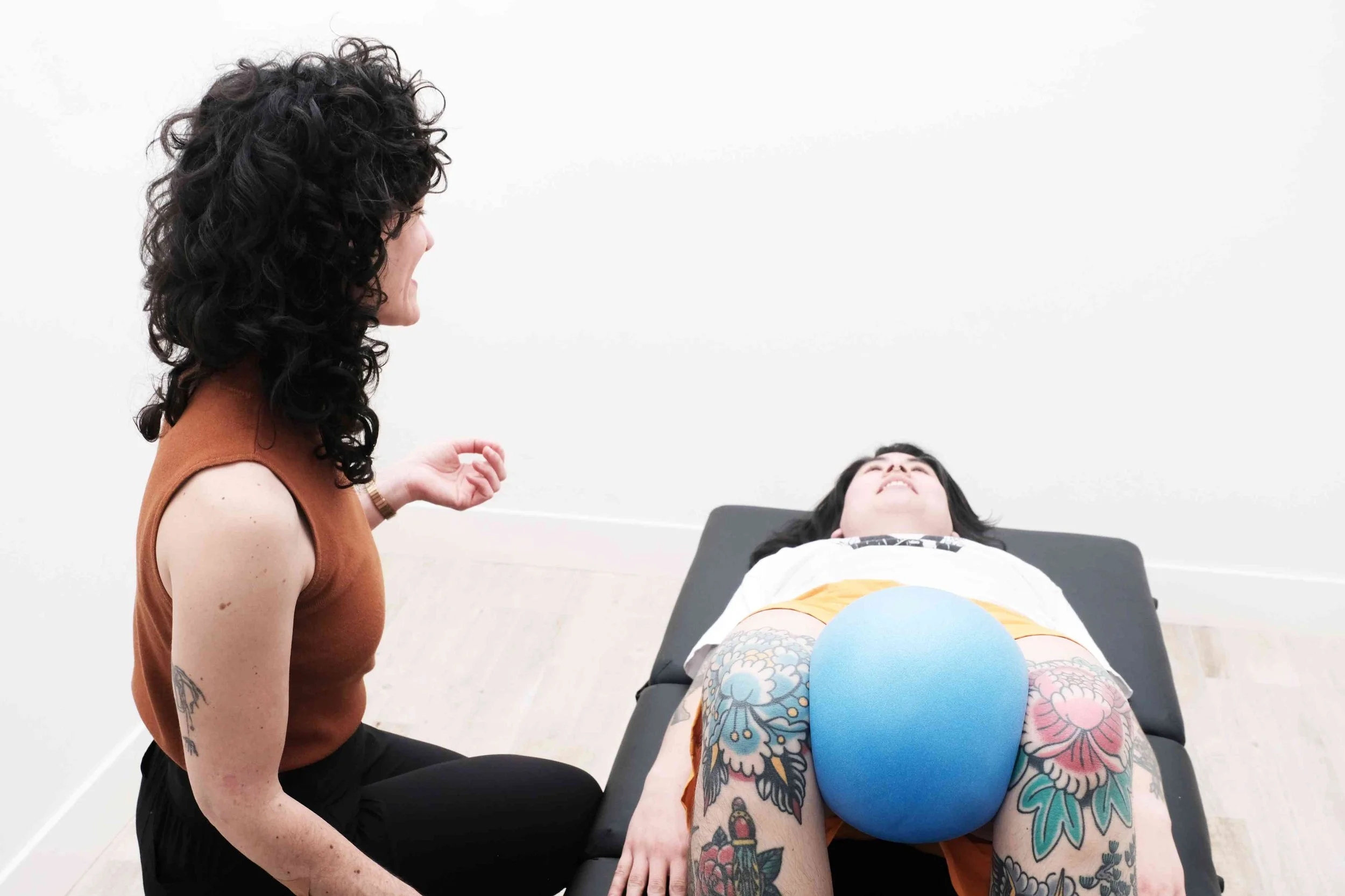
Strength and movement for people who need a little extra support
It’s important to have options for people who are afraid of moving, frequently injured, or hypermobile and just need a little extra.
Strength isn’t something you can graduate from. Maintaining strength requires regular and continued movement and muscle overload. This might feel intimidating, but the right programming can set you up for success. Occupational therapists are trained specifically to help people navigate their daily behaviors and routines to help you stay on track.
Because of my broad experience and specialized education with experts in the field, I can help you navigate strength-training and set you up with a program that complements your specific symptoms and presentation.
Some of my favorite things to treat:
chronic pain
pregnancy-related pelvic girdle pain
pubic symphysis dysfunction or pubic bone pain
difficulty or pain with childcare tasks
hypermobility spectrum disorder (HSD) and hypermobile Ehlers Danlos Syndrome/hEDS
osteoporosis
diastasis recti or abdominal separation
sacroiliac pain or SI joint pain
scoliosis
hip replacements and knee replacements
non-surgical treatment of knee pain or meniscus issues
arthritis
nerve syndromes, like sciatica
jaw pain and teeth grinding
hormonal transitions like gender-affirming hormone therapy, postpartum, perimenopause, or menopause
plantar fasciitis
disc herniations
anxiety about exercise
anxiety about injury or re-injury
Staying motivated to build strength and keep moving can sometimes be a challenge.
This can be especially true when working through acute or chronic health concerns. My experience treating persistent pain is wide and varied. Everyone has their own unique relationship with pain and there are multiple avenues we can explore together to work toward managing your daily existence and reducing flare ups.
I appreciate the neuroscience of pain and how researchers are starting to understand the complex relationship between the body, the brain, the environment, and the pain we feel. I also appreciate your experience and values and always stand by the fact that you will always know more about your body than any healthcare provider ever could.
I’m here with gentle encouragement to help you stay motivated, work toward your goals, and strengthen your muscles in a way that feels right for you.
Common symptoms we see:
low back pain
hip pain
jaw pain
SI joint pain or sacroiliac joint pain
scar restriction after top surgery
body changes from hormonal transitions like perimenopause or gender-affirming hormone therapy
hEDS/Ehlers-Danlos Syndrome
hypermobility spectrum disorder
osteoporosis
insomnia
diastasis recti or abdominal separation
difficulty feeling abdominal muscles
pressure management for hernias
pain during pregnancy or postpartum pain
pregnancy-related pelvic girdle pain
pubic symphysis dysfunction or pubic bone pain
difficulty or pain with childcare tasks
Frequently Asked Questions
-
The pelvic floor is a group of muscles at the base of the pelvis, forming a hammock-like structure. It's key to controlling bowel and bladder function, supporting pelvic organs, enabling sexual function, and posture. These muscles work together with breathing, similar to the movement of a trampoline. If the pelvic floor becomes weak or dysfunctional due to factors like pregnancy, trauma, surgery, or stress, it can cause issues such as urinary leakage, pelvic pain, or sexual dysfunction. Proper pelvic floor function is important for overall health and well-being.
-
Yes, everyone has a pelvic floor and can experience symptoms of dysfunction. We treat people along the entire spectrum of genitals.
-
Although it is common, it is never normal to leak urine during any activity. It is a sign that something is off in the pelvic floor. This may be weakness, tightness, incoordination, or a combination of these things.
-
Pelvic floor therapy can help decrease or manage any symptom related to peeing, bowel problems, sexual problems, or pain in or around the pelvis (including SI joint pain, hip pain, low back pain, pubic symphysis pain, tailbone pain, and pregnancy-related pain or dysfunction). We can also help with digestive issues like constipation or abdominal bloating, sexual issues like erectile dysfunction or difficulty with orgasm, and diastasis recti (changes in the abdominal wall).
-
To streamline your care and avoid running out of time during your initial session, please fill out the intake paperwork and consent forms that are emailed to you before your appointment time. Please also wear clothes that allow you to comfortably move your body.
Your provider will spend some time at the beginning of your session asking questions about your goals, symptoms, habits, and health history so they can determine what types of physical assessments will be most beneficial.
The physical assessment will likely include external areas around your abdomen, hips, thighs, and pelvic region. If an internal vaginal or internal rectal assessment is indicated, your provider will explain the process and only proceed with direct and enthusiastic consent. An internal muscle assessment can provide a lot of information about your strength, coordination, endurance, and potential areas of tenderness, but it is definitely not required.
After identifying contributing factors, we will create a personalized, evidence-based care plan to help you return to your best self.
-
Wear something comfortable that you can move in. Your session may include an assessment or treatment of the pelvic floor that will involve undressing from the waist down with your explicit consent.
-
Genital body hair is normal and expected, so you don’t need to remove hair for your session.
-
Menstrual blood will not change your evaluation or treatment, so no need to cancel if you’re comfortable coming in. Bring an extra protective product with you in case you don’t like the tampons or pads we have available.
We will not likely do an internal assessment if you have an active infection, have bleeding unrelated to menstruation, or are in your first trimester of pregnancy. Please tell your provider if you are experiencing any of these.
-
Most patients come in for about 6-12 visits. There are some symptoms of pelvic floor dysfunction that can quickly resolve with a few sessions, but your plan of care will largely depend on individual factors related to your unique situation. As much as we all wish there was a single exercise, a pill, an injection, or other quick fix for these symptoms, we need to admit that this does not exist. We first need to identify the problem and then take a multi-systems approach to help you regain an active and pain-free life that allows you to resume the activities you’ve stopped because of your symptoms. Some patients will feel significant relief before they complete their plan of care and that’s always a win. You’ll come in once a week to start and we can transition to every other week as you become more independent in self-management. The goal is to give you the tools to help yourself so you don’t need us anymore!
-
Kegels (pelvic floor muscle contractions) can be helpful for some specific pelvic floor presentations, but symptoms can be confusing and it’s impossible to know whether or not kegels are appropriate for you without an individual assessment by a pelvic floor therapist.
Keep in mind that sometimes kegels can make symptoms worse. Also, many people perform kegel exercises incorrectly. If you’ve received the advice to just do kegels, it’s a good idea to get checked out to see if they are appropriate for you. Many symptoms of pelvic floor dysfunction can improve or disappear without any kegels at all.
-
We do not have active contracts with any insurance companies, but can provide you with a super bill if you have out-of-network coverage. We also accept HSA payments. We do not directly communicate with insurance companies, so it is your responsibility to understand your benefits and submit any paperwork they require for reimbursement. Additionally, we legally cannot see Medicare or Medicaid/Medi-cal patients for pelvic floor therapy, even with our sliding scale rate due to limitations built into the system.
-
Your insurance company’s phone number should be on your insurance card. You can call that number and speak to a representative to ask if you have coverage for out-of-network occupational therapy. You can ask for a quote of what they will reimburse or ask what percentage they typically reimburse for occupational therapy services.
If they ask for CPT codes, you can say:
97167
97110
97112
97140
97530
97535
-
Pelvic floor therapy addresses a wide variety of symptoms that often aren't prioritized by insurance companies. By not accepting insurance, we can offer personalized, hour long sessions that focus entirely on you, your goals, and your symptoms. This allows us to treat all aspects of your health without being limited to just one body part or specific diagnosis due to insurance restrictions. Together, we'll create a care plan that fits your schedule and budget. We respect your time and will never recommend more appointments than necessary to help you achieve your goals. With our price transparency, you’ll never face unexpected bills due to insurance denials that can be common in pelvic health. While paying out of pocket may seem like a big investment, we’ve found that, depending on your co-pay, deductible, and treatment plan, our services can be be the more affordable option.
-
No, occupational therapy is considered direct access in California and you do not need a referral to receive services. If you are using out-of-network benefits, it’s possible that your insurance company will ask for a physician referral.
-
Yes, totally! We understand life happens and sometimes it can even help your therapist see your body movements when you’re interacting with your child. We also offer virtual sessions if you or your child are feeling unwell.
-
We have a 24 hour cancellation policy. If you do not cancel before this, you will be charged the full appointment amount. If you are unable to attend your session, we will offer you a virtual session so we can stay on track and continue making progress toward your goals.